
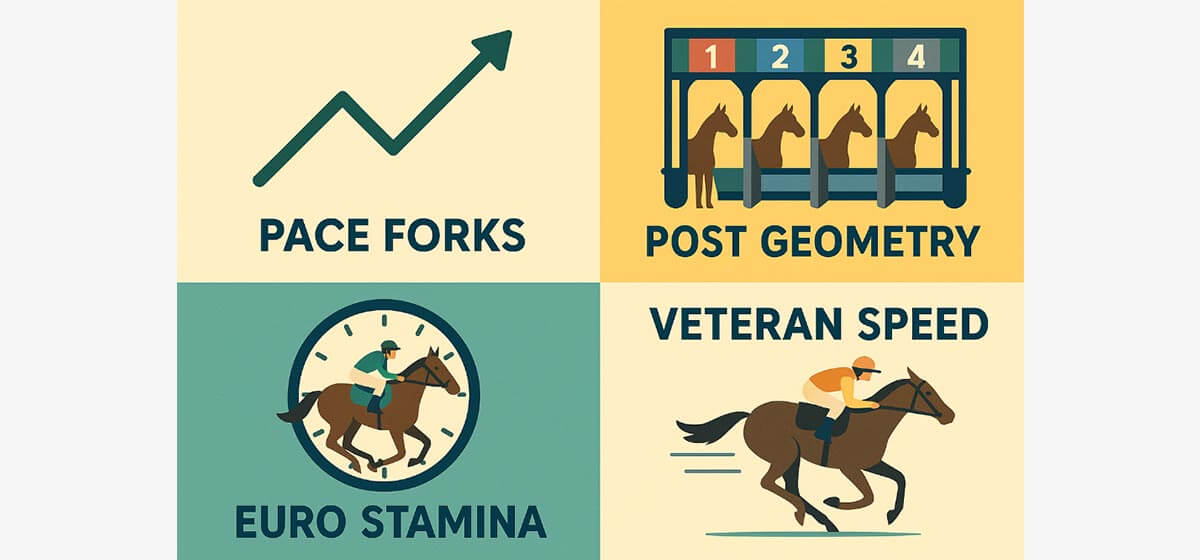
Del Mar rewards the handicapper who can picture the race before the horses hit the far turn. Class matters, of course, but this place pays people who read trips with discipline. The sun is bright, the pools are deep, and the margins are thin. If you want to turn opinions into cash, you need a map. Here is mine. It leans on proven pace methodology, practical course knowledge, recent big-race examples, and the kind of ticket management that pros use every day. No guesswork, no inflated claims, just a clear way to turn talent on paper into trips that win.
1) Read the Pace Fork Before the Gate Opens
Every race begins with a choice. A handful of runners commit to velocity. Everyone else decides whether to chase or let the heat do its work. That split is the pace fork. You do not need mystical powers to find it. You need a consistent figure set for early energy and a sharp eye for pattern.
I sort fields by three jobs. First are the instigators, the ones whose history says they will push the opening quarter and half. Second are the drafters with the tactical speed to sit within two lengths and pounce. Third are the finishers who can lift their final eighth when the duel breaks a favorite’s heart. This is not a hunch exercise. It is a translation of past performances and pace figures into a likely race shape.
Two guardrails keep this honest. Lone speed on paper is not always lone speed out of the gate. And a closer with a real final-furlong kick becomes dangerous when two true burners hook by the first call. If your pace fork projection is right more often than not, you will find plays that look obvious in the replay and were invisible to the board an hour earlier.
2) Respect Post and Path Geometry in the Del Mar Mile on Turf
A mile on the Del Mar turf has not been the graveyard that many players assume. The course configuration gives outside posts a chance, provided the horse and rider can secure a workable lane before the clubhouse turn. Inside draws are still valuable, but only if the horse leaves cleanly enough to hold pocket position.
Your job is to evaluate how each runner converts a draw into a path. A horse breaking from the nine or ten hole is not dead if it can clear to a two or three wide stalking spot by the first bend. A horse drawn on the rail is not golden if it breaks a half step slow and gets pinched. Think of ground loss as a tax that rises with traffic. Saving ground is the cheapest way to beat better animals, but it only works if the trip remains clean.
At longer turf routes like 1 1/16 miles and 1 1/8 miles, the outside becomes harder to live with. Those distances ask horses to hold position for longer and pay a higher tax when they are caught wide on both turns. That is where you start pricing trouble into a big draw unless the horse has the tactical speed to cross and the professionalism to switch off.
3) Five Furlongs on Turf: The Break Meets the Lane
Del Mar runs turf sprints at five furlongs. The start matters. The first call matters. So does the lane at the top of the stretch. Too many players stop after the first two facts. They talk like only a wire will do. The best example to shut that talk down happened right here when a top juvenile sprint field produced a winner that did not need to wire the race. Call it a reminder that a clean lane and an honest final eighth can erase a one length deficit faster than you think.
Build these races by asking three simple questions. Who is reliable from the gate. Who sits two to three lengths off without losing rhythm. Who owns a proven sub 12 seconds finish over this course or a similar quick turf. When the inside speed is genuine and alone, the gate horse is your default. When two or three rockets are drawn together, the stalker with a measured late punch becomes live. Rider tendencies matter here. Some turf jockeys at Del Mar are excellent at sliding out from the two path to the three just before the eighth pole. They create daylight where a lesser pilot would wait and lose. Track that habit and you will anticipate winning moves before they happen.
4) Euro Stamina at Twelve Furlongs and Why Late Energy Travels
When the distance stretches to 12 furlongs, elite stamina becomes the currency. This is where international class shows its teeth. We have seen a high level turf stayer ship in and finish through the line at Del Mar at a speed that local routers could not match. That horse already owned this race at a different venue, then came back and did it again on the Pacific coast. The lesson is durable and simple. Proven form at the trip travels. Efficient late energy at 10 to 12 furlongs is a trait, not a one-off.
Handicap these races with the first half-mile in mind. If you are projecting a controlled 48 for the half, you should prefer the runner whose past races show a genuine lift from the half-mile pole home. That preference grows stronger when a horse has already finished powerfully at the full mile and a half against top company. You are not betting a nationality. You are betting a profile that is built to finish when the rest of the field starts to shorten stride.
5) Veteran Speed in Five and Six Furlong Sprints
Older sprinters can be deadly at Del Mar when the map is friendly. There is a turf specialist who has made a living over the five furlong course here, even claiming a third straight win in a Grade 3 by benefit of a disqualification. The trip pattern is textbook. Break alertly. Sit second. Pounce at the sixteenth when the pace never boiled over. The point is not that age is magic. The point is that proven speed and course craft hold up when the early fractions are honest instead of frantic.
Use veteran speed as a primary opinion when the projection says a clear lead or a sit second trip is likely. Be far more cautious when three intent sprinters are drawn in a line. In those shapes you want a price on the old pro or you pivot to a stalker that has won here with a clean lane and a strong final eighth. Humans like stories about old warriors. Your bankroll prefers cool math about pace shape.
6) Scratch Management: Rules, Not Rumors
Nothing ruins a good day like building a clean sequence and losing a single to a late scratch. The difference between a pro and a panicked bettor is planning. Track policy and state rules tell you how each pool handles scratches. Daily Double rules are straightforward. If a horse scratches in the first leg, you are looking at a refund, not a mystery substitute. If the scratch happens in the second leg after you have already won the first, the track may pay a consolation. The point is simple. You should know this before the gates open.
Write the policy on your worksheet and build tickets that do not collapse if one horse comes out. Your readers will thank you for explaining how to replace combinations or re-key spreads without chasing ghosts. This is not about being clever. It is about removing last minute stress so you can keep your focus on trip and value.
7) Build Each Del Mar Race From the Ground Up
This is the routine I teach new players and the checklist I still run for myself.
Step one. Project the pace and identify the instigators, the draft, and the closers. Step two. Map the first turn by post and path. At a mile, fair is a reasonable baseline, but make the call based on whether the horse can secure position into the bend. Step three. Weigh late energy by distance. Twelve furlongs rewards proven stayers who have shown a finishing kick at the trip or right below it. Step four. Account for veteran speed when the map is friendly and cool it when the map screams meltdown. Step five. Pre-plan a scratch response so you are not rewriting tickets as they load.
If you keep those five steps tight, your opinion will get sharper with repetition. You will also be able to explain your tickets in two sentences, which is the real test of confidence.
8) Turn the Framework Into Tickets People Can Actually Bet
Knowing what to do is not the same as cashing. Here is how I translate the map into wagers that make sense for a wide audience.
In a five furlong turf sprint, I start with Exactas. If I expect two rockets to go hard early and a capable stalker to sit close, I will key that stalker on top in $1 Exactas over the speeds and the best true closer. I will cover the reverse for $1 if the rail speed looks loose and could wire. The idea is not to spray. It is to make small, clear plays that match the map you drew. When you explain this to readers, show them the projected first call, the three horses who matter, and the trip you see in plain language.
In a mile turf race, I like to pair a win opinion with small Daily Doubles into later spots on the card. I will keep a wide post on my A line if the horse has shown it can clear to a workable lane by the first turn. I will not bury a horse just for drawing outside at this distance. In the notes I will write how the track treats a Daily Double scratch so a late change does not rattle anyone who followed the play. A calm audience is a repeat audience.
In a twelve furlong turf feature, I am thinking about Trifectas and conservative Pick 3s. If the half projects to be controlled, I am keying the stayer with the best finishing profile and building $1 Trifectas that use logical stalkers in the second and third slots. If I include a price horse, I explain exactly how the trip helps that horse. I am not trying to impress anyone with creativity. I am trying to cash a tidy ticket at a fair multiple.
In a short sprint that features a proven older specialist, I want a sequence that rewards a single when the map is kind. That is a $1 Pick 3 or a $1 Daily Double structure where the veteran sits second and finishes. If the shape looks hotter than that, I either demand a square price to stay on or I pivot to a stalking type that has already proven the course.
9) Sound Principles That Hold Up Under Expert Scrutiny
There is nothing here that an experienced trip handicapper will find controversial. The pace fork approach is a standard way to interpret how a race will unfold. It is grounded in early energy figures and past-performance patterns that can be verified. The post and path discussion reflects what we have seen at Del Mar since the course update that preceded the last two Breeders’ Cups hosted here. The five furlong turf section uses a high profile race to prove that off the pace wins are possible, which keeps new readers from clinging to a wire-or-bust myth. The twelve furlong stamina angle is built on the most trustworthy narrow sample you can cite in American turf racing, elite stayers who have already shown they can finish through the line at a mile and a half. The veteran speed section is rooted in a living case study over Del Mar’s five furlongs. Scratch management is grounded in published policy and state rules that exist to protect the customer.
When you write for sharp readers, confidence comes from moderation. Make the claim you can defend, no more. When you teach newer players, clarity comes from examples that fit the idea and from wagers small enough to try. That is how you build trust across the whole audience.
10) Final Word: Trip Wins Here
Del Mar can make a good horse look ordinary and a smart handicapper look gifted. That is the nature of a track where position and rhythm decide as much as raw class. If you read the fork, respect the turn, understand five furlong mechanics, trust twelve furlong stamina, use veteran speed when the map allows, and plan for scratches, you will stop chasing and start anticipating. Put it to work on a single race with a $1 Exacta. Put it to work across a sequence with a $1 Daily Double or a $1 Pick 3. Keep notes, watch replays, and do not cheat the process. The track will tell you when your map is getting sharper. The tote will tell you when your opinions have become edges.
