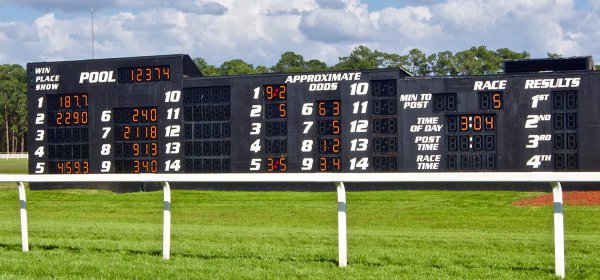
Artificial intelligence has quietly become the steward of modern wagering. It watches the same signals sharp bettors watch, only faster and across every pool at once. The objective is simple. Keep the marketplace honest so the odds you see reflect genuine opinion rather than manufactured pressure. That work rests on two pillars. The first is model-driven compliance that turns raw transactions into objective signals. The second is automating compliance in syndicate-driven model environments so checks and alerts happen in real time without slowing bets. When those pieces fit together, the tote board behaves like a fair scoreboard and betting feels like what it should be, a contest of insight, preparation, and nerve.
1. Why Integrity Matters to Bettors: How AI Keeps Pools Fair and Prices Honest
Every bettor wants prices that track fair probability. When pools are clean, a favorite is honestly supported, an overlay is real, and a late move tends to match the story of the race. Manipulation bends that logic by creating false signals, such as abrupt plunges in thin pools that tug the Win price or synchronized bets that make a cold runner look live. Artificial intelligence helps guard against that by comparing current behavior to baselines that reflect track, class, distance, field size, and liquidity. If the pattern does not resemble healthy market movement, the system raises an alert before distortion becomes payout reality. Live race supervision and modern tools allow stewards to monitor every race, review incidents quickly, and act on verified evidence rather than guesswork. This creates a culture where suspicious behavior is examined promptly and where confidence is based on process, not promises.
Trust feeds liquidity, and liquidity stabilizes prices. Deep participation reduces the impact of isolated surges because genuine opinion outweighs noise. Integrity platforms tie each transaction to time, pool, and related activity, then surface anomalies for human review so that small issues do not grow into bigger ones. The important point for bettors is practical. Monitoring runs beside the tote rather than in front of it, which means wagers are accepted at normal speed while the market stays under watch. Transparent audit trails show what happened, when it happened, and why an alert fired, creating accountability that supports the long-term health of the pools. Over time, this steady supervision raises confidence that the numbers on the board express informed opinion and not engineered pressure.
2. What AI Actually Tracks: Odds Moves, Pool Imbalances, Betting Velocity, and Cross-Race Links
Integrity tools begin with facts that matter to handicappers. They ingest wager timestamps, stake sizes, account provenance, pool types, and the evolving odds for every runner. The first job is to distinguish natural movement from manufactured pressure. Natural movement follows cues that bettors recognize, such as a strong paddock appearance, a late rider change, or a scratch that alters the pace scenario. Manufactured pressure often looks different. It may appear as a sudden collapse in a lightly traded pool without matching movement in Win or Place, or as repeated bursts that hit the same combinations at a consistent cadence.
Pool imbalance is an early sign that something needs attention. If Exacta volume swells at an unusual minute while the Win pool barely moves, that inconsistency increases the likelihood that someone is trying to influence the headline price. Betting velocity adds additional context. A flood of wagers in a 30 second window can be normal before a marquee stakes race, yet it may be abnormal in a weekday claimer. Cross-race and cross-track links provide another dimension. When clusters of accounts place similar wagers across multiple cards in the same time frames, models compare the sequence to known legitimate strategies and to patterns previously associated with irregular activity. The point is not to label every sharp move as a problem. The point is to identify sequences that diverge from healthy baselines so trained reviewers can decide what deserves action and what deserves a pass.
Under the hood, machine learning models build behavioral baselines by venue and race type and then assign anomaly scores when sequences deviate. Those ranked signals move to human reviewers with context so they can act or clear quickly. Model-driven compliance is built for scale. It focuses limited attention where it is most useful while letting normal betting flow. For bettors, the benefit is straightforward. Prices at decision time are more likely to reflect genuine opinion than an artificial push, which keeps the focus on handicapping skill rather than on guessing whether a move is authentic or engineered.
3. Pattern Detection in Action: Spotting Sharp Syndicate Signatures vs. Natural Market Drift
Syndicates that play within the rules develop recognizable habits. They enter at consistent windows, scale stakes with pool depth, and spread risk in ways that fit their models. Coordinated groups that attempt to bend the board produce different signatures. They strike in narrow bursts, repeat the same combinations across cards, and often target thin pools that can shift a headline price with relatively modest spend. Pattern detection works because those habits leave fingerprints. Models track timing, bet structures, and cross-account relationships, then classify what they see as consistent with legitimate sharp play or suggestive of manipulation.
Clustering methods identify accounts that act as a unit and assign anomaly scores based on how far the group’s behavior deviates from norms for the race type and liquidity. Systems also learn natural drift, which is normal market movement influenced by scratches, a strong warmup, or public handicapping sentiment. Natural drift tends to spread across related pools and to follow a cadence that reflects rising interest. Forced drift is narrow, abrupt, and disproportionate to overall liquidity. The model compares present movement to historical patterns so it can separate real enthusiasm from engineered pressure with increasing accuracy over time.
When a pattern crosses thresholds, reviewers check context such as scratches, track bias, weather, and rider changes. If the narrative fits, the alert is documented and the baseline is refined so similar situations do not trigger noise in the future. If it does not fit, the case escalates. Escalation can include deeper linkage analysis, temporary holds, or other steps defined by rules. This process protects bettors from manipulation while keeping legitimate sharp money in play. For players, the net effect is practical. Fewer head scratching price swings appear in the final minutes, multi race sequences become more predictable, and the board becomes a clearer mirror of probability rather than a canvas for tactical distortion.
4. Automating Compliance in Syndicate-Driven Model: Real-Time Rules Checks Without Slowing Wagers
Race days move quickly, and so do the pools. That is why automating compliance in syndicate-driven model environments is essential. Instead of relying on static checks after the last race, automated systems run continuously while pools are open. If a policy violation or coordinated pattern emerges, an alert appears during the betting cycle. Proper infrastructure is critical. Data must move from bet entry to analysis to reviewers within seconds, and it must arrive with context so a human can tell a coincidence from a meaningful signal without slowing normal betting. When the plumbing works, the market retains its pace while the integrity program keeps steady watch.
Uniformity across tracks helps players who move between circuits. Shared standards for wagering system security and totalizator operations give regulators a common reference so the same tactic draws attention wherever the framework is adopted. Consistency creates confidence because bettors can expect comparable guardrails even when the card changes and handle shifts from venue to venue. Automation also supports fairness by applying the same rule sets everywhere, which reduces the chance that a technique slips through at one track that would have been flagged at another.
Automation learns from experience. Each resolved alert, even if cleared, goes back into the training set so thresholds adjust and false positives fall. This keeps the front end smooth. Bets are accepted at normal speed and the customer experience stays intact while the heavy lifting happens in the background. For bettors, the payoff is straightforward. A market that reacts quickly to harmful behavior while keeping the action fluid protects value in Win and Place pools and stabilizes prices in Exacta, Trifecta, and Pick sequences. You keep your timing and the board keeps its integrity, which is the balance a healthy tote should deliver.
5. Model-Driven Compliance Workflows: From Data Ingest to Alerts, Reviews, and Resolutions
A credible integrity program runs on workflow, not slogans. It starts with secure data ingest that timestamps and validates each transaction and links it to accounts and pools. Streams feed an analysis engine that scores behavior against baselines, prioritizes unusual patterns, and pushes high severity items to human reviewers. This triage ensures that attention lands where it is most needed instead of getting lost in the noise of an active card.
Review brings racing sense to the data. Analysts check whether flagged patterns match reasonable race day factors such as a late scratch that creates lone speed, a weather shift, a rider change, or a widely publicized tip that explains a swing. If the explanation is solid, the case is closed and recorded so the model learns not to raise the same false alarm. If the explanation does not fit, the alert escalates to compliance officers or stewards under established rules. Each step is logged, creating an audit trail that can be verified later. This is what makes integrity programs trustworthy. There is a record of the trigger, the evidence, the decision, and the outcome, and those records can be examined to ensure that enforcement is even handed and accurate.
Resolution closes the loop. Confirmed issues can lead to sanctions under applicable rules, and the model retrains on the outcome so similar behavior is recognized more quickly next time. Programs track metrics such as detection speed, false positive rate, and time to resolution. Over time, a well run workflow reduces noise, surfaces genuine problems earlier, and builds a history that regulators and customers can trust. For bettors, the practical benefit is calmer boards in the minutes before post and truer prices from race to race. Your handicapping edge remains tied to your analysis rather than to avoiding distortions that should never have happened.
6. Network Graphs and Heatmaps: Exposing Coordinated Plays Across Accounts, Races, and Tracks
Some behaviors reveal themselves visually, which is why modern integrity programs use network graphs and heatmaps. Network graphs treat accounts as nodes and shared behaviors as links. If several accounts repeatedly place identical Exacta or Pick 3 combinations within narrow windows and across different tracks, the graph shows a tight cluster that deserves scrutiny. Heatmaps add timing and intensity. They highlight the minutes where risk concentrates and the pools that carry abnormal weight for the situation, which helps teams allocate attention efficiently and plan coverage for high risk windows.
Graph based methods match the structure of the problem. Collusion is a network phenomenon that reveals itself through relationships and synchronized timing rather than isolated transactions. By modeling links and cadence directly, graph techniques capture dependency structures that account by account analysis can miss. In practice, this makes it easier to separate legitimate team strategies from manipulative patterns. A stable syndicate that distributes risk responsibly tends to scale with liquidity and maintain a logical relation to value. A ring designed to yank the headline price often shows abrupt unity of timing and a reliance on fringe pools that magnify small sums.
Visuals also improve communication and governance. A clear figure that shows where and when risk spiked can make a complex case understandable to non technical stakeholders while protecting private details. Real time supervision that pairs technology with experienced stewards allows quick, defensible decisions when visuals and data align. Bettors feel the effect as steadier boards with fewer shocks that clash with the race narrative and a clearer link between price movement and authentic opinion. The excitement of the final minutes remains intact while the market benefits from a consistent, visual check on coordination.
7. Explainable Signals Bettors Can Trust: Clear Reasons Behind Flags
Confidence grows when decisions are explainable. In practice, explainable AI means every alert carries the reasons it fired. A reviewer can see that odds moved in a way that diverged from normal baselines, that a set of accounts placed identical wagers inside a narrow window, or that volume appeared in a pool that rarely behaves that way for the class. The factors and their influence are logged so humans can replay the reasoning and test whether it holds up in context. When reviewers can understand and communicate why a decision was made, trust in the process increases and the potential for misunderstanding decreases.
Transparency supports fairness in two directions. Internally, audit trails preserve the evidence chain from data to decision so stewards and regulators can verify that enforcement is even handed. Externally, operators can describe categories of behavior that draw attention and publish high level results without exposing private information. Customers then see that systems monitor patterns rather than people and that interventions rest on objective evidence. This is essential in a pari mutuel environment where public confidence is a competitive edge. Clear explanations help keep the conversation focused on behavior and rules rather than on speculation about motives.
Explainability also improves the models themselves. By studying which features contribute to accurate flags, teams remove signals that add noise and calibrate thresholds that were too sensitive. Over time, false positives decline and attention focuses on the behavior that truly matters. For bettors, this translates into markets governed by logic instead of mystery. If a pool is affected by an integrity action, there is a clear reason tied to observable behavior, and that transparency builds trust. It also means you can focus on handicapping with less worry that an opaque system will distort a price without explanation.
8. Guardrails and Governance: Privacy, Audit Trails, and Thresholds That Avoid False Positives
Strong integrity can coexist with strong privacy. Governance frameworks define who can access sensitive information, how long data is retained, and how it is secured. Encryption and access controls protect account level details while models still compare behavior to baselines and produce useful signals. Thresholds are just as important. If sensitivity is set too high, ordinary betting triggers alerts and wastes reviewer time. If it is set too low, real problems slip through. Teams measure false positive rates and tune thresholds to match track, pool, and race class so sensitivity aligns with risk.
Audit trails give every case a documented history. Alerts include trigger data, review notes, and outcomes. Independent oversight can examine those logs to confirm fairness. Shared standards for wagering system security and totalizator operations underscore why these controls matter and encourage consistent frameworks across jurisdictions. Uniform application of rules gives bettors a consistent level of protection wherever they play, which is particularly important in a sport that spans many tracks and regulatory bodies.
Bias testing sits inside the same discipline. Models are checked to ensure they do not unfairly target certain bettor categories, race classes, or track types. If imbalance appears, features are adjusted or removed. Integrity authorities regularly review and update their procedures, which shows a culture of continuous improvement rather than set and forget. That mindset keeps programs aligned with law and common sense expectations and helps bettors enjoy a smooth experience with strong protections running behind the scenes. The combination of privacy, auditability, and calibration is what lets markets remain open and lively while being well supervised.
9. Bettor Benefits Today: Cleaner Pools, Truer Odds, and More Confidence in Your Edge
Integrity produces outcomes you can feel in your results. Cleaner pools make handicapping inputs more reliable. Truer odds protect overlays and make expected value meaningful again. When markets behave logically, confidence rises and participation deepens, which strengthens liquidity and stabilizes payouts. The benefit is not abstract. It shows up when a well constructed Exacta is not undercut by a late, artificial push, when a Pick 4 sequence closes with prices that track probability, and when a $1 Win bet holds the value you identified at the moment you placed it.
The relationship between monitoring and market quality is visible through operational improvements. Real time alerting shortens review cycles because alerts arrive with context and evidence. Feedback loops retrain models so false positives decline. When those improvements stack up, bettors see fewer sudden collapses in thin pools and fewer unexplained flips near the bell. Public reporting by integrity organizations provides high level visibility into how often suspicious patterns are surfaced and examined. Even when those reports aggregate multiple sports, the signal is relevant. It demonstrates that systematic monitoring can discover irregular behavior at scale, route it to qualified reviewers, and record outcomes that are subject to oversight.
Education matters as much as engineering. When operators explain the categories of behavior that draw attention and publish program summaries in plain language, bettors understand that the goal is a level playing field, not surveillance for its own sake. Visual examples of network clusters and time based heatmaps make the idea concrete without exposing private data. For everyday players, the message is simple. Your handicapping skill is the deciding factor more often when the board is protected from distortion. You can trust the prices you see, build tickets with confidence, and measure results against a fair market.
10. What’s Next: Cross-Track Standards, Shared Watchlists, and Continuous Model Tuning
The next gains will come from cooperation and continual improvement. Cross track standards help venues compare apples to apples. Shared definitions for anomalies, common severity scales for alerts, and compatible audit formats make it easier to spot patterns that span jurisdictions. Regulators encourage adoption of model rules by reference so that safeguards look familiar to bettors even when the card changes. Where law permits, information sharing helps prevent migration of suspicious behavior from one venue to another while keeping legitimate play unbothered. This is how a sport with many jurisdictions tightens its fabric without slowing the game.
Continuous tuning keeps detection sharp as strategies evolve. Bettors adapt, tools change, and liquidity shifts with the calendar. By retraining on recent data and incorporating resolved cases, compliance teams maintain accuracy and keep false positives down. Predictive compliance pushes the timeline earlier by identifying higher risk windows and focusing attention where it is most likely to be needed. That might mean extra eyes on specific pools during a high profile card or additional checks when field size and weather create known vulnerabilities. The same logic applies to model calibration on the bettor’s side. A well calibrated probability line is more valuable than a model that only maximizes accuracy, because long term results depend on whether your prices align with reality.
For bettors, the outlook is encouraging. As cooperation grows and monitoring methods improve, protections at one venue will mirror protections at another. Prices should track genuine opinion more faithfully, with fewer unexplained jolts near the bell. Model-driven compliance will remain the backbone, and automating compliance in syndicate-driven model environments will keep checks at race speed. The aim does not change. Let skill and information decide outcomes, keep the marketplace fair, and make sure the tote tells the truth. Whether you are placing a $1 Win bet to try a new angle or building a complex Pick 5, the sport is strongest when integrity is visible and the board is a trusted reflection of the crowd’s view.